 Member of Morris Group International
PFAS in Your Water: Understanding the Risks & Taking Action

February 7, 2025
You may have heard about the concerning health effects linked to PFAS chemicals found in many water supplies.
PFAS, which stands for per- and polyfluoroalkyl substances, are a group of man-made chemicals used in various industries and consumer products since the 1940s. They are very persistent in the environment and the human body, meaning they don’t break down and can accumulate over time.
Understanding PFAS: A Growing Health Concern
The EPA says that you can be exposed to PFAS through multiple sources—a significant one being drinking water with PFAS contamination.
You, your friends, neighbors, pets, farm animals, and all the critters around you likely have these chemicals in their blood, and it’s a worldwide problem.
Exposure to PFAS has been linked to serious health risks, including:
- Increased cholesterol levels
- Decreased vaccine response in children
- Increased risk of kidney or testicular cancer
- Increased risk of high blood pressure or pre-eclampsia in pregnant women
- Lower infant birth weights
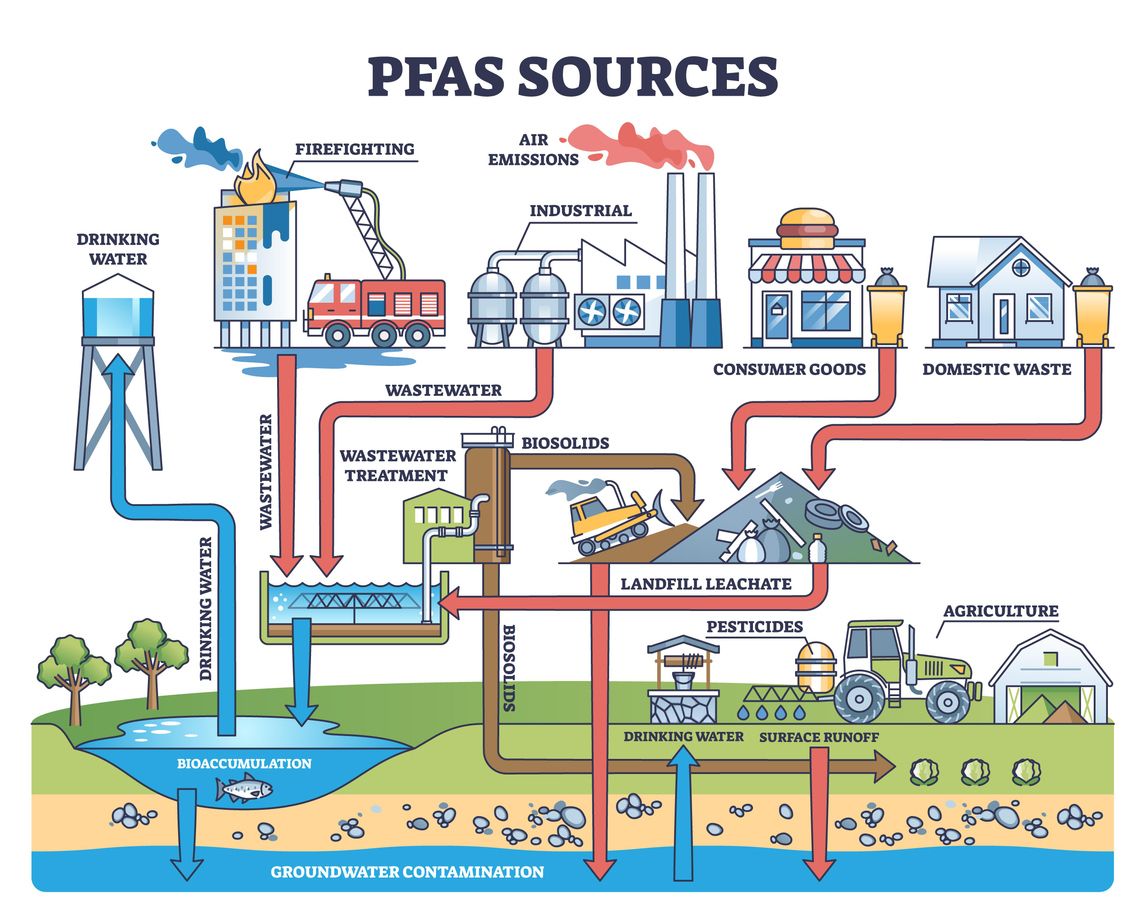
PFAS Protection: The Global Response
Awareness is the first step. Since 2021, the EPA has been addressing this issue, and the U.S. is not alone. Governmental bodies around the world are taking PFAS exposure very seriously. Remember, drinking water is a significant source of contamination because what is in the ground and air eventually makes its way to water sources, including groundwater.
Countries worldwide are enacting new laws and guidelines as more scientific information develops. These include designating PFAS as hazardous materials, creating a legally enforceable drinking water standard to protect communities from exposure to harmful PFAS, and more.
Take Action: Protecting Your Water Today
If your home or office is connected to public water supply, you can contact your local water utility to ask how they address PFAS. If they have tested for PFAS, ask them to share that information, and if they have not, encourage them to do so.
If you have a private well, you should conduct regular testing. Your state environmental or health agency should provide a list of state-certified laboratories that use EPA-developed testing methods.
Of course, for added safety, consider installing certified water filters to lower the levels of PFAS in your water.
Murdock’s Solution: Advanced PFAS Filtration
To address this health concern and provide extra peace of mind, we are excited to announce that our drinking fountains and bottle fillers now come with the option to add a special filter designed to reduce PFAS and PFOS (Perfluorooctane Sulfonate—part of the PFAS group of chemicals).
Key benefits of our PFAS/PFOS filter:
- Reduces PFAS/PFOS contamination: Our high-quality fountain water filter has been third-party tested to ensure it significantly reduces the level of PFAS chemicals in drinking water.
- Added protection: While we always aim to provide safe, clean drinking water, the PFAS/PFOS filter provides an extra layer of protection against these concerning contaminants.
- Trustworthy technology: Our filter uses a unique two-stage filtration system to target and remove PFAS/PFOS effectively, as verified by independent lab testing.
- Affordable and convenient: Adding a PFAS/PFOS filter is an inexpensive way to treat water right at the point of use. Our filters are easy to install and simple to maintain.
Explore our PFAS filtration solutionsand take the first step toward cleaner water.
Learn More: Understanding Your Water Supply
At Murdock we’re committed to providing solutions like our PFAS filter to help you take control of your water quality. But we also believe in empowering our customers to advocate for themselves. Contact your water supplier today!
- Find your local water supplier’s contact information on your water bill or their website.
- Call or email to ask about PFAS testing and treatment in your area. Questions to ask:
- Have they tested for PFAS, and what were the results?
- What steps are they taking to reduce PFAS contamination?
- How often do they monitor for PFAS and other contaminants? - Request a copy of their most recent water quality report to see the complete picture of what’s in your water.